Fahion
Kevin Hart Netflix Roast Controversy: Michael Che’s Race Problem

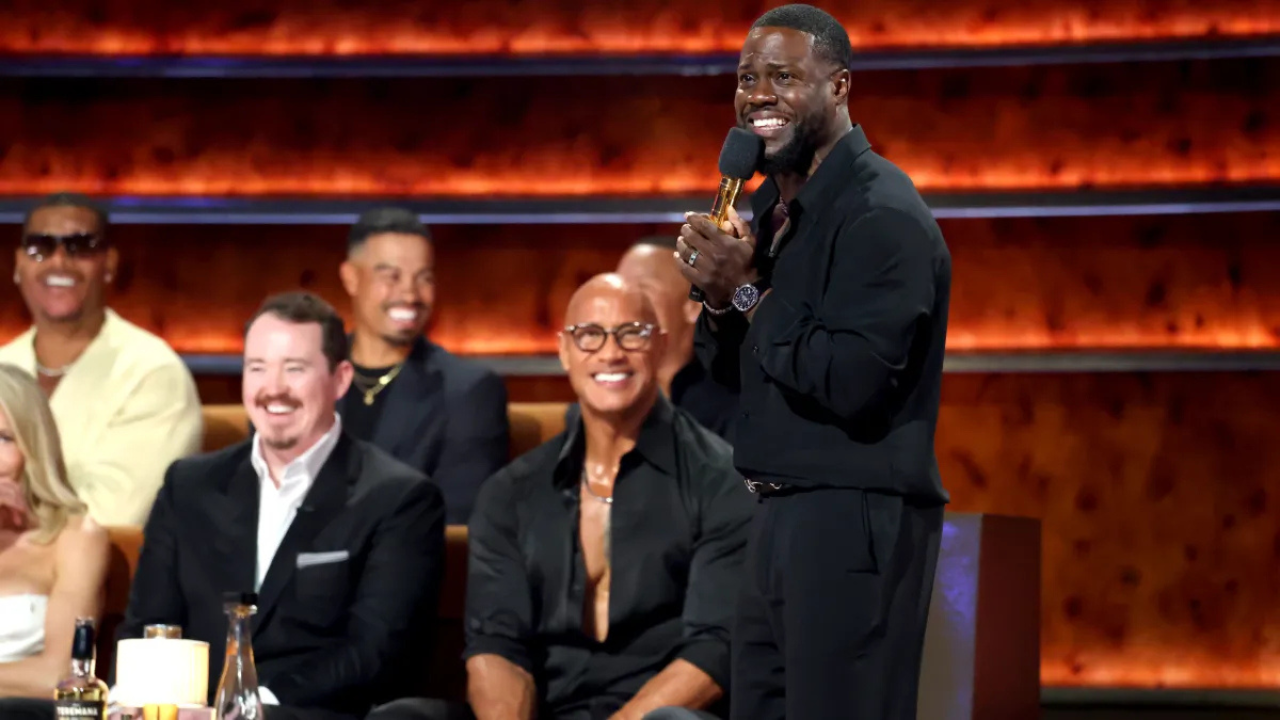
“The Roast of Kevin Hart” aired live on Netflix from the Kia Forum in Los Angeles as part of the Netflix Is a Joke Festival, and on paper, it had everything it needed to work. Hart is the most commercially successful Black comedian of his generation. The guest list, kept secret until the night, included Dwayne Johnson, Katt Williams, Teyana Taylor, Jeff Ross, Pete Davidson, Chelsea Handler, and Shane Gillis as host. Three hours of live television, a packed arena, and a subject whose career and personal life offer almost unlimited material.
What emerged instead was a roast that left a significant portion of its audience, and several people who work in comedy, deeply uncomfortable, and not in the way a roast is supposed to make you uncomfortable. The discomfort was not the sharp, cathartic kind that good roast comedy produces. It was the dull, deflating kind that arrives when humor misses not just its target but the entire room.
Michael Che’s Opinion on Kevin Hart’s Roast
Michael Che, who had been slated to perform but pulled out due to scheduling conflicts with “Saturday Night Live,” watched from the outside and eventually said what many in the audience were already feeling. On Instagram, he wrote with characteristic precision: “White guys and Black people joke differently. Black guy roasts like, ‘look at this n— shoes!’ White roasts are like, ‘Slavery, math, slain teens, sex crimes, slurs, family secrets.’ White guys don’t give a fuck about their shoes.”
In a separate post, Che turned his attention to the writing room. He noted that five of the joke writers photographed together were all white, Nick Mullen, J.P. McDade, Mike Lawrence, Dan St. Germain, and Zac Amico, and asked, with the kind of rhetorical economy that makes his point devastating: “C’monnnnnnnnn… that’s not funny?” It is worth noting that the roast had 17 credited writers in total, several of whom are Black, and that many comedians hired their own additional writers. But Che’s observation was not really about the math. It was about the sensibility that ended up on screen.
Kevin Hart Netflix Roast Controversy: What Actually Happened on Stage

The jokes that drew the most backlash were specific enough to warrant description. Shane Gillis, the roast host, made jokes mocking Hart’s height that referenced slavery and lynching, the lynching quip, Gillis himself acknowledged, had required “three weeks of deliberation” before he committed to it.
Tony Hinchcliffe made a joke about George Floyd that generated immediate online backlash. Pete Davidson and Hinchcliffe both made jokes referencing but not saying the N-word. Several comedians, including Johnson, Gillis, and Jeff Ross, made repeated jokes about Hart’s late father’s addiction to crack cocaine. Jeff Ross summarised the event’s philosophy the day after with a phrase that unintentionally captured the problem: “Nothing was off limits.”
The issue is not that roasts have limits. They do not and should not. The issue is that “nothing off limits” requires a level of trust between the comedian and the audience about who is wielding the material and why. When George Floyd becomes a punchline and lynching becomes a deliberate comic device at the celebration of a Black man’s career, the question of who is doing the deliberating — and whether they have earned the right to those particular jokes in that particular room — becomes impossible to ignore. The roast did not feel transgressive. It felt like a group of people who had been handed a permission slip and used it without fully understanding what they had been given.
What the Night Got Right
Nobody can do what Katt Williams does. I love it just roast the living shit out of Kevin Hart. pic.twitter.com/t7sbYUAlA8
— THE PODCAST MYER TPM 🆇︎ (@THeMyerSHOW) May 12, 2026
It would be inaccurate to characterise the entire evening as a failure, and the moments that worked deserve acknowledgment because they reveal what the roast could have been throughout. Dwayne Johnson’s appearance was the night’s emotional centrepiece. He walked in late, to pro wrestling entrance music, and spent his time on the dais moving between genuine affection and the kind of jokes that only work between people who have actually built something together. He brought up the fact that both he and Hart had recently lost their fathers, showed a side-by-side of their fathers’ very different physiques, and then got serious for a moment: “I love you, brother.”
Equally significant was the appearance of Katt Williams, with whom Hart has had one of the most publicly documented feuds in comedy. Williams arrived, announced he had come only for the money, and delivered the kind of self-aware line that only someone with his specific history with Hart could have written: “I won an Emmy Award, but this is gonna be my best acting tonight as I pretend you are a GOAT.” The crowd understood exactly what they were watching, two men with real history choosing, in public, to put it down. That moment carried weight precisely because the relationship beneath it was genuine.
Who Gets to Tell Whose Story
Kevin Hart deserves what’s coming.
The Roast of Kevin Hart hosted by Shane Gillis is LIVE on Netflix May 10 at 5PM PT | 8PM ET. pic.twitter.com/VgLmKFWQTR
— Netflix (@netflix) April 23, 2026
The deeper problem the Kevin Hart Netflix roast program exposed is one the entertainment industry has been circling for years without fully resolving. Representation in front of the camera has improved meaningfully. Representation in the writing room, in the production infrastructure, and in the creative decision-making that shapes what actually ends up on screen has not kept pace. A roast is a particularly acute test of this because roast comedy is not a genre that survives cultural distance.
It requires intimacy, shared reference, and an understanding of what a joke costs the person it is aimed at. Writing jokes about a Black man’s dead father’s drug addiction requires knowing, at a cellular level, what that material means in the community it comes from, not just that it is edgy, but what edge it is cutting along and who it is cutting.
Che’s Instagram posts were not a call for sanitised comedy. He is one of the sharpest comedians working in a format, “Weekend Update,” that has been making people uncomfortable for fifty years. His critique was a narrower and more precise one: that the people who were handed the pen for this particular celebration were not the right people to be holding it, and the screen confirmed it.
Featured image: Netflix